



Materiality Assessment Tools: The Complete Guide for Sustainability Leaders
Organizations are under growing pressure from investors, regulators, customers, and stakeholders to demonstrate how sustainability issues affect business performance. This is where materiality assessment tools have become essential.
A materiality assessment helps organizations identify and prioritize the environmental, social, governance (ESG), and business issues that matter most to stakeholders and long-term business success. However, conducting these assessments manually can be complex, time-consuming, and prone to bias.
Modern digital solutions simplify the process by enabling organizations to gather stakeholder insights, analyze risks, prioritize sustainability topics, and generate materiality matrices with greater accuracy and efficiency.
In this guide, we explore everything organizations need to know about selecting and implementing the right solution, common challenges, best practices, and future trends shaping the sustainability landscape.
What Are Materiality Assessment Tools?
Materiality assessment tools are software platforms and digital frameworks that help organizations identify, evaluate, and prioritize sustainability topics based on stakeholder expectations and business impact.
These solutions typically support:
- Stakeholder engagement
- Survey management
- ESG data collection
- Topic prioritization
- Risk analysis
- Materiality matrix creation
- Reporting alignment
- Audit-ready documentation
Instead of relying on spreadsheets and disconnected processes, organizations can centralize their sustainability decision-making within a structured framework.
Why Materiality Assessments Have Become Critical
The sustainability reporting landscape has changed dramatically over the last few years.
Organizations must increasingly align with frameworks such as:
- GRI Standards
- CSRD
- ESRS
- ISSB
- SASB
- TCFD
- UN Global Compact
Investors now expect companies to clearly explain which sustainability issues are most relevant to their operations and value creation strategy.
Without a structured assessment process, organizations risk:
- Missing stakeholder expectations
- Misallocating sustainability resources
- Reporting irrelevant information
- Failing compliance requirements
- Losing investor confidence
A robust assessment process ensures resources are directed toward issues that genuinely influence organizational performance and stakeholder trust.
Leadership Insight
“The purpose of a materiality assessment is not to create another sustainability report. It is to identify the issues that will define an organization’s resilience, stakeholder trust, and long-term value creation. Companies that treat materiality as a strategic business exercise consistently make better ESG decisions than those that view it as a compliance requirement.”
Key Features to Look for in Materiality Assessment Tools
Not all platforms offer the same capabilities.
1. Stakeholder Engagement Management
The ability to collect feedback from:
- Employees
- Customers
- Investors
- Suppliers
- Communities
- Regulators
A strong stakeholder engagement process improves assessment accuracy and credibility.
2. Materiality Matrix Generation
Visualization capabilities help organizations understand how sustainability topics rank according to:
- Business impact
- Stakeholder importance
Interactive matrices provide better decision-making support.
3. ESG Framework Mapping
The best solutions align sustainability topics with:
- Global Reporting Initiative (GRI)
- Corporate Sustainability Reporting Directive (CSRD)
- European Sustainability Reporting Standards (ESRS)
- Sustainability Accounting Standards Board (SASB)
- International Sustainability Standards Board (ISSB)
This reduces reporting complexity.
4. Risk Assessment Integration
Organizations increasingly connect sustainability risks with enterprise risk management processes.
Integrated risk analysis provides deeper insights into long-term business resilience.
5. Data Analytics and Dashboards
Advanced dashboards help sustainability leaders:
- Monitor stakeholder responses
- Identify emerging trends
- Track issue prioritization
- Support board-level reporting
Types of Materiality Assessment Tools
Different organizations require different levels of sophistication.
Spreadsheet-Based Approaches
Suitable for:
- Small businesses
- Early-stage sustainability programs
Advantages:
- Low cost
- Easy implementation
Limitations:
- Manual processes
- Limited scalability
- Higher error risk
Survey and Stakeholder Platforms
These solutions focus primarily on stakeholder engagement and feedback collection.
Best suited for organizations seeking structured consultation processes.
ESG Management Platforms
Comprehensive sustainability software often includes assessment functionality alongside:
- ESG reporting
- Carbon management
- Compliance management
- Supplier sustainability programs
These platforms offer greater integration and scalability.
Enterprise Sustainability Suites
Large multinational organizations often require enterprise-grade solutions capable of supporting:
- Multiple business units
- Global stakeholders
- Multi-language engagement
- Complex reporting requirements
| Assessment Approach | Best For | Cost | Scalability | Stakeholder Engagement | Reporting Readiness | Key Limitation |
|---|---|---|---|---|---|---|
| Spreadsheet-Based Assessment | Small businesses & startups | Low | Low | Limited | Basic | Manual and prone to errors |
| Survey Platforms | Mid-sized organizations | Medium | Medium | Strong | Moderate | Limited ESG integration |
| ESG Management Platforms | Growing organizations | Medium-High | High | Strong | High | Requires implementation effort |
| Enterprise Sustainability Suites | Large global companies | High | Very High | Advanced | Very High | Higher investment and complexity |
| AI-Powered Assessment Solutions | Mature ESG programs | Medium-High | High | Advanced | High | Emerging technology with evolving capabilities |
How to Select the Right Materiality Assessment Tool
Choosing the right platform should never start with software features.
Instead, organizations should first answer the following questions:
What Are Your Reporting Requirements?
Determine whether your organization reports against:
- GRI
- CSRD
- ESRS
- ISSB
- SASB
Framework alignment should influence software selection.
How Many Stakeholders Will Participate?
A company engaging 100 stakeholders requires very different capabilities compared to one engaging 10,000 participants globally.
What Is Your ESG Maturity Level?
Organizations with mature sustainability programs often require:
- Advanced analytics
- Scenario analysis
- Risk integration
- Board-level dashboards
Newer programs may prioritize simplicity and ease of use.
What Existing Systems Need Integration?
Consider integration with:
- ERP systems
- Risk management software
- ESG reporting platforms
- Supplier management systems
Integration reduces duplicate work and improves data consistency.
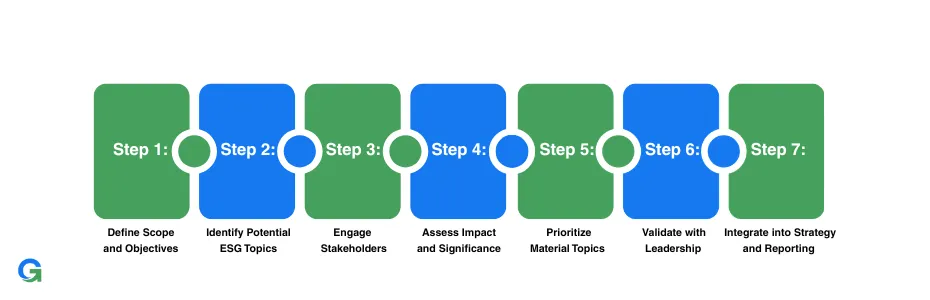 Step-by-Step Materiality Assessment Process
Regardless of software selection, most successful assessments follow a similar methodology.
Step 1: Define Scope
Identify:
- Business units
- Geographic regions
- Stakeholder groups
- Reporting objectives
Step 2: Identify Sustainability Topics
Develop a comprehensive list of potential issues covering:
- Environmental topics
- Social topics
- Governance topics
- Industry-specific concerns
Step 3: Engage Stakeholders
Gather stakeholder input using surveys, interviews, workshops, and consultations.
Step 4: Analyze Results
Evaluate:
- Stakeholder importance
- Business impact
- Risk exposure
- Strategic relevance
Step 5: Prioritize Issues
Create a materiality matrix highlighting high-priority topics.
Step 6: Validate Findings
Leadership teams should review and validate results before finalization.
Step 7: Integrate into Strategy
Assessment outcomes should directly influence:
- Sustainability goals
- ESG initiatives
- Risk management
- Corporate strategy
Case Study: How a Manufacturing Company Improved ESG Prioritization
A mid-sized manufacturing organization relied on spreadsheets for stakeholder engagement and sustainability prioritization.
Challenges included:
- Low stakeholder participation
- Manual analysis
- Inconsistent documentation
- Limited executive visibility
After implementing a digital assessment platform, the organization achieved:
- Higher stakeholder response rates
- Faster analysis cycles
- Improved reporting readiness
- Stronger executive engagement
Most importantly, leadership gained confidence that sustainability investments were aligned with stakeholder expectations and business priorities.
Common Mistakes Organizations Make
Treating Materiality as a Reporting Exercise
Materiality should guide business decisions—not simply satisfy reporting requirements.
Ignoring Key Stakeholder Groups
Incomplete stakeholder representation can distort results.
Focusing Only on Current Issues
Organizations should also evaluate emerging sustainability risks.
Failing to Update Assessments
Material topics evolve as business conditions and stakeholder expectations change.
Future Trends in Materiality Assessment
The next generation of assessment platforms is expected to include:
Artificial Intelligence
AI can help identify emerging sustainability risks and stakeholder concerns.
Predictive Analytics
Organizations will increasingly forecast future material issues rather than only assessing current priorities.
Real-Time Stakeholder Monitoring
Continuous engagement models may replace annual assessment cycles.
Double Materiality Analysis
Regulations increasingly require organizations to evaluate:
- Financial materiality
- Impact materiality
Future solutions will provide stronger support for double materiality assessments.
How Sustainability Consulting Can Support Materiality Assessments
While technology provides structure, successful assessments still require expertise.
Organizations often seek external support for:
- Stakeholder mapping
- Survey design
- Topic identification
- Double materiality analysis
- Framework alignment
- ESG strategy integration
Expert guidance helps organizations maximize the value generated from assessment outcomes.
Conclusion
Materiality assessments have evolved from optional sustainability exercises into strategic business requirements.
The right tools can transform complex stakeholder engagement and ESG prioritization processes into actionable insights that drive long-term value creation.
Organizations that invest in robust assessment methodologies gain a clearer understanding of stakeholder expectations, improve ESG reporting quality, strengthen risk management, and build greater trust with investors and customers.
As reporting requirements continue to evolve, selecting the right solution today can position organizations for long-term sustainability success.
Ready to align your sustainability strategy?
Talk to Growlity about building your ESG reporting strategy.