Insights
CBAM Compliance: Why It Is Becoming a Strategic Business Priority in 2026
For years, carbon regulations were treated as sustainability discussions. Today, they directly influence trade, procurement decisions, supplier selection, and market access. This is exactly why CBAM Compliance has rapidly become one of the most important topics for exporters, manufacturers, and ESG professionals worldwide.
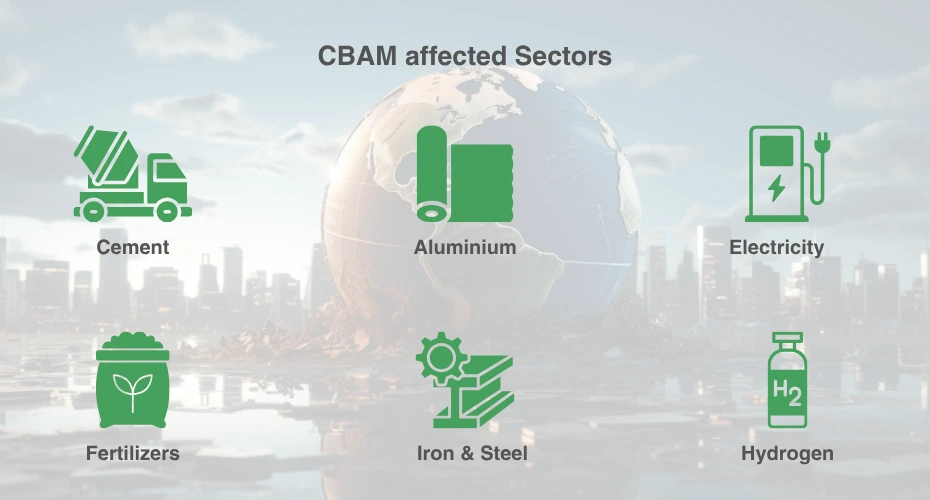
The European Union’s Carbon Border Adjustment Mechanism (CBAM) is reshaping global trade by attaching a carbon cost to imported goods. Companies exporting products such as steel, aluminum, cement, fertilizers, electricity, and hydrogen into the EU are now expected to report embedded emissions with increasing accuracy.
What makes this important is not only regulatory pressure. CBAM is changing how buyers evaluate suppliers. Companies with poor emissions transparency may face procurement risks, pricing disadvantages, or even loss of contracts.
Organizations that prepare early can transform compliance into a strategic advantage. Those that delay may struggle with reporting complexity, supplier engagement, emissions verification, and financial exposure.
This guide explains everything businesses need to know about CBAM Compliance, including reporting requirements, timelines, calculation methodologies, risks, implementation strategies, and how companies can build long-term readiness.
What Is CBAM Compliance?
CBAM Compliance refers to meeting the reporting, emissions calculation, documentation, and regulatory obligations under the EU Carbon Border Adjustment Mechanism.
The CBAM framework was introduced by the European Union to prevent “carbon leakage,” where production shifts to countries with weaker climate regulations.
Under CBAM, importers must report the carbon emissions embedded in imported products. Over time, these emissions may carry a carbon price aligned with the EU Emissions Trading System (EU ETS).
The regulation primarily impacts:
- Steel & iron
- Aluminum
- Cement
- Fertilizers
- Hydrogen
- Electricity
- Certain downstream products
Although the regulation directly applies to EU importers, non-EU manufacturers and exporters are heavily impacted because buyers now require verified emissions data from suppliers.
Why CBAM Compliance Matters More Than Companies Realize
Many organizations still view CBAM as a reporting exercise. In reality, it is becoming a competitive market filter.
Procurement Teams Are Prioritizing Carbon Transparency
European buyers increasingly want suppliers that can provide:
- Product-level emissions data
- Verified carbon accounting
- Transparent methodologies
- Traceable energy consumption
- Supplier engagement records
Suppliers unable to provide this information may lose business opportunities.
CBAM Is Expanding ESG Into Trade Economics
Carbon emissions are no longer just sustainability metrics. They are becoming cost variables that directly influence:
- Product pricing
- Import competitiveness
- Supply chain decisions
- Trade relationships
- Procurement strategy
Investors and Customers Expect Readiness
Companies demonstrating strong carbon governance often gain advantages in:
- ESG ratings
- Sustainability disclosures
- Investor confidence
- Global procurement frameworks
- Long-term resilience
Understanding the CBAM Transition Phase
The transition period began in October 2023 and focuses primarily on emissions reporting.
During this phase, importers must submit quarterly CBAM reports containing:
- Direct emissions data
- Indirect emissions data (where applicable)
- Production information
- Methodology disclosures
No financial adjustment is currently required during the transitional period, but inaccurate reporting can create operational and compliance risks.
From the full implementation phase onward, financial liabilities linked to embedded carbon emissions are expected to become increasingly significant.
Industries Most Affected by CBAM Compliance
Steel and Iron
Steel manufacturers are among the most heavily impacted sectors due to high emissions intensity and strong EU demand.
Aluminum
Energy-intensive aluminum production creates significant emissions reporting challenges, especially where electricity grids are carbon-heavy.
Cement
Cement production generates substantial process emissions, making accurate carbon accounting critical.
Fertilizers
Ammonia and fertilizer production involve high embedded emissions linked to energy use and industrial processes.
Hydrogen
Low-carbon hydrogen verification is becoming increasingly important for EU trade access.
Key Components of CBAM Compliance
1. Emissions Data Collection
Organizations need accurate activity-level operational data, including:
- Fuel consumption
- Electricity usage
- Raw material inputs
- Production quantities
- Process emissions
Without reliable internal systems, reporting accuracy becomes difficult.
2. Emissions Calculation Methodology
Businesses must use accepted methodologies for determining embedded emissions.
This often includes:
- Emission factors
- Process calculations
- Energy-based accounting
- Production-specific allocation models
Poor methodologies can create compliance gaps and credibility issues.
3. Supplier Engagement
One of the biggest CBAM challenges is supplier data collection.
Companies increasingly need:
- Upstream emissions visibility
- Supplier questionnaires
- Standardized reporting formats
- Verification processes
Organizations with mature supply chain sustainability programs generally adapt faster.
4. Verification and Documentation
Documentation quality is becoming essential.
Companies should maintain:
- Audit trails
- Emissions records
- Methodology explanations
- Supporting calculations
- Internal approvals
Strong documentation supports both compliance and customer trust.
Common Challenges in CBAM Compliance
Data Availability Issues
Many manufacturers lack granular emissions data at product level.
Supplier Resistance
Suppliers may not yet have mature ESG reporting systems.
Inconsistent Methodologies
Different facilities may use varying assumptions, reducing comparability.
Resource Constraints
Sustainability teams often struggle with limited technical capacity.
Technology Gaps
Manual spreadsheets create scalability and auditability issues.
How Companies Can Build a Strong CBAM Strategy
Conduct a CBAM Readiness Assessment
Organizations should first identify:
- Products covered under CBAM
- Emissions hotspots
- Data gaps
- Supplier dependencies
- Reporting responsibilities
This creates a roadmap for implementation.
Develop Internal Carbon Accounting Systems
Strong systems improve:
- Reporting efficiency
- Data accuracy
- Audit readiness
- Operational visibility
Digital sustainability platforms can help centralize emissions management.
Train Cross-Functional Teams
CBAM is not just a sustainability issue.
It impacts:
- Procurement
- Operations
- Finance
- Trade compliance
- Legal teams
- Leadership
Cross-functional collaboration improves long-term success.
Integrate Sustainability Into Procurement
Leading companies are embedding emissions transparency into supplier onboarding and evaluation.
This improves long-term supply chain resilience.
Case Study: How Early CBAM Preparation Helped an Export Manufacturer
A mid-sized industrial exporter supplying European customers identified that several products fell within CBAM scope.
Initially, the company faced:
- Incomplete supplier data
- No product-level emissions calculations
- Limited internal ESG expertise
- Customer pressure for disclosures
The organization implemented a phased CBAM readiness program that included:
- Supplier engagement frameworks
- Product carbon footprint calculations
- Internal reporting systems
- Emissions data verification
Within a year, the company improved customer confidence, accelerated procurement approvals, and positioned itself as a lower-risk supplier for EU buyers.
The key lesson was simple: early preparation reduced operational friction and strengthened commercial positioning.
The Relationship Between CBAM and Product Carbon Footprint (PCF)
Many businesses underestimate the connection between CBAM and Product Carbon Footprint assessments.
Product-level emissions transparency is becoming increasingly important because:
- Buyers demand traceability
- Reporting expectations are increasing
- Carbon benchmarking is evolving
- Procurement standards are tightening
Companies already investing in PCF calculations often adapt to CBAM faster than competitors.
CBAM Compliance and ESG Reporting Are Converging
CBAM does not exist in isolation.
It increasingly overlaps with:
- Climate disclosures
- Supply chain transparency
- ESG ratings
- Net-zero strategies
- Sustainable procurement programs
Organizations that integrate these initiatives create stronger operational efficiency and reporting consistency.
Future Trends in CBAM Compliance
Expansion to More Sectors
Additional industries and downstream products may eventually fall within CBAM scope.
Increased Verification Expectations
Third-party verification requirements are expected to become stricter.
Carbon Transparency as Procurement Standard
Emissions disclosure may become a baseline supplier requirement globally.
Digital Carbon Reporting Ecosystems
Automation and ESG technology platforms will play a larger role in emissions reporting and compliance management.
How Businesses Can Turn CBAM Compliance Into Competitive Advantage
Companies that proactively prepare can gain advantages such as:
- Stronger customer trust
- Improved supplier relationships
- Better ESG positioning
- Enhanced procurement eligibility
- Reduced future compliance disruption
The businesses that treat carbon transparency strategically rather than reactively are likely to outperform competitors in global markets.
Final Thoughts
CBAM is far more than a regulatory reporting obligation. It represents a structural shift in how international trade, sustainability, and procurement intersect.
Businesses that invest early in emissions transparency, carbon accounting systems, supplier engagement, and governance frameworks can position themselves for long-term resilience.
As climate regulations continue evolving globally, organizations that build strong sustainability foundations today will be better equipped for future compliance expectations and market demands.
If your organization exports to Europe or participates in global supply chains, now is the time to strengthen your CBAM readiness strategy.
What is the CBAM regulation?
What is CBAM compliance?
What are the 6 categories of CBAM?
What is CBAM in simple terms?
Does CBAM apply to Indian exporters?
What data is required for CBAM reporting?
What happens if a company is not prepared for CBAM?
How can businesses prepare for CBAM compliance?



Latest Blog Posts