Insights
ESG Materiality Assessment: Why the Right Priorities Matter More Than Hundreds of ESG Metrics
Many companies spend months collecting sustainability data, preparing ESG reports, and responding to investor questionnaires. Yet surprisingly, many still fail to answer one fundamental question:
Which ESG issues actually matter most to the business and its stakeholders?
This is where an ESG Materiality Assessment becomes one of the most important exercises in a company’s sustainability journey.
Without a structured assessment, organizations often report everything but prioritize nothing. The result is lengthy sustainability reports, scattered ESG initiatives, and limited business value.
An effective ESG Materiality Assessment helps organizations focus resources on the environmental, social, and governance topics that have the greatest impact on long-term success. More importantly, it creates alignment between stakeholder expectations, business strategy, risk management, and sustainability performance.
As regulations tighten and investors demand greater transparency, materiality is no longer just a reporting exercise—it has become a strategic business tool.
What is an ESG Materiality Assessment?
An ESG Materiality Assessment is a structured process used to identify, evaluate, and prioritize sustainability topics that are most significant to an organization and its stakeholders.
The assessment helps answer questions such as:
- Which sustainability issues can significantly affect business performance?
- Which ESG risks could impact enterprise value?
- What concerns are most important to stakeholders?
- Which topics should be prioritized in sustainability reporting?
- Where should investments and management attention be focused?
The outcome is typically presented through a Materiality Matrix or Materiality Prioritization Framework that highlights the most important ESG topics.
Instead of treating all sustainability issues equally, organizations identify where action will generate the greatest business and stakeholder value.
Why ESG Materiality Assessment Has Become a Business Imperative
A decade ago, many organizations viewed materiality primarily as a reporting requirement.
Today, it influences:
- Investor confidence
- Risk management
- Corporate strategy
- Regulatory compliance
- ESG ratings
- Sustainable finance decisions
- Supply chain resilience
Investors increasingly want evidence that companies understand their most significant ESG risks and opportunities.
Boards are asking whether climate change, cybersecurity, human rights, biodiversity, employee wellbeing, and governance risks are adequately reflected in business strategy.
Regulators are introducing disclosure requirements that require organizations to justify why specific ESG topics are considered material.
Organizations that fail to identify material issues risk focusing on activities that create little strategic value while overlooking emerging risks that could affect future growth.
The Evolution from Traditional Materiality to Double Materiality
One of the biggest developments in sustainability reporting is the shift toward Double Materiality.
Traditional materiality focuses on:
Financial Materiality
How sustainability issues impact the company.
Examples:
- Climate risks affecting operations
- Supply chain disruptions
- Regulatory penalties
- Talent retention challenges
Double Materiality introduces a second dimension:
Impact Materiality
How the company’s activities impact society, the environment, and stakeholders.
Examples:
- Greenhouse gas emissions
- Water consumption
- Human rights impacts
- Community effects
- Biodiversity loss
This approach recognizes that sustainability issues can be material both because they affect business performance and because businesses affect society.
As global reporting frameworks evolve, double materiality is becoming increasingly important for organizations seeking future-ready ESG strategies.
Key Benefits of Conducting an ESG Materiality Assessment
1. Improves Strategic Focus
Organizations often face dozens of ESG issues.
A structured assessment helps identify the topics that deserve executive attention and investment.
2. Strengthens Stakeholder Trust
Stakeholders are more likely to trust organizations that actively engage them in decision-making processes.
3. Enhances ESG Reporting Quality
Materiality ensures sustainability reports focus on the topics that matter most rather than providing excessive disclosure on less relevant issues.
4. Supports Risk Management
Emerging ESG risks can be identified before they become significant business challenges.
5. Improves Investor Communication
Investors increasingly evaluate how effectively organizations identify and manage material sustainability risks and opportunities.
Step-by-Step ESG Materiality Assessment Process
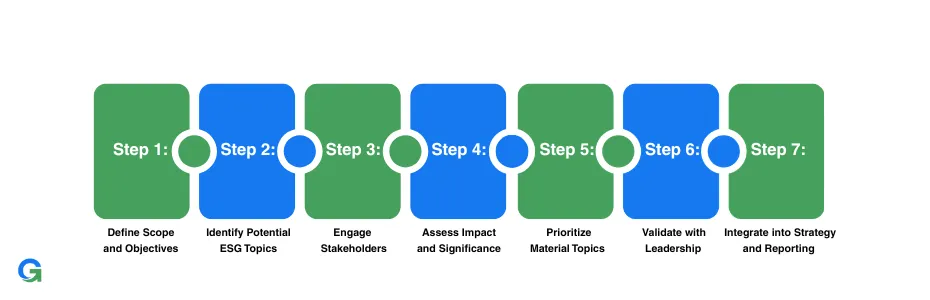
Step 1: Define Scope and Objectives
Determine:
- Business units included
- Geographic coverage
- Stakeholder groups
- Reporting requirements
- Strategic objectives
Clear boundaries improve assessment quality and consistency.
Step 2: Identify Potential ESG Topics
Sources may include:
- Industry standards
- Regulatory requirements
- Peer benchmarking
- Stakeholder feedback
- Risk assessments
- Sustainability frameworks
Typical topics include:
- Climate change
- Energy management
- Water stewardship
- Waste management
- Diversity and inclusion
- Human rights
- Data privacy
- Ethics and compliance
Step 3: Engage Stakeholders
Stakeholder engagement is the foundation of a credible materiality process.
Common stakeholder groups include:
- Investors
- Employees
- Customers
- Suppliers
- Communities
- Regulators
- Industry associations
Engagement methods may include surveys, interviews, workshops, and focus groups.
Step 4: Assess Impact and Significance
Organizations evaluate:
- Business impact
- Financial implications
- Stakeholder concern
- Regulatory relevance
- Strategic importance
- Long-term sustainability impact
Step 5: Prioritize Material Topics
Issues are ranked based on significance.
This stage helps distinguish between:
- High-priority issues
- Medium-priority issues
- Emerging issues
Step 6: Validate with Leadership
Senior management and the board should review and validate results.
Leadership alignment ensures material topics influence strategic decision-making.
Step 7: Integrate into Strategy and Reporting
Materiality should not end with a matrix.
The findings should influence:
- ESG targets
- Sustainability programs
- Risk management
- Corporate strategy
- Sustainability disclosures
Common ESG Materiality Assessment Mistakes
Many organizations fail to realize the full value of materiality because of avoidable mistakes.
Treating It as a Reporting Exercise
Materiality should drive business decisions, not simply support report preparation.
Limited Stakeholder Engagement
Insufficient stakeholder input can result in incomplete or biased outcomes.
Ignoring Emerging Risks
Issues such as biodiversity, AI governance, climate adaptation, and supply chain resilience may become material faster than expected.
Lack of Executive Involvement
Without leadership participation, findings often fail to influence strategy.
Conducting Assessments Too Infrequently
Material issues evolve as markets, regulations, and stakeholder expectations change.
ESG Materiality Assessment Example
Consider a manufacturing company conducting a materiality assessment.
After stakeholder engagement and risk evaluation, the top material topics identified may include:
- Climate Change and Decarbonization
- Energy Efficiency
- Occupational Health and Safety
- Supply Chain Sustainability
- Ethical Business Conduct
- Circular Economy Practices
Instead of allocating equal resources across dozens of ESG topics, the company can focus investments on areas that deliver measurable business and sustainability outcomes.
The Future of ESG Materiality Assessment
Several trends are reshaping how organizations approach materiality:
- Double Materiality adoption
- AI-powered stakeholder analysis
- Integrated risk assessments
- Sector-specific ESG priorities
- Greater regulatory scrutiny
- Real-time ESG monitoring
Organizations that proactively adapt their materiality processes will be better positioned to navigate changing stakeholder expectations and sustainability requirements.
How to Build a High-Impact ESG Materiality Assessment
The most effective organizations:
- Align materiality with business strategy
- Engage stakeholders continuously
- Incorporate double materiality principles
- Review material topics regularly
- Link findings to measurable targets
- Use materiality outcomes to drive decision-making
A well-executed ESG Materiality Assessment transforms sustainability from a reporting function into a strategic advantage.
Conclusion
An ESG Materiality Assessment is no longer optional for organizations seeking credible sustainability performance and long-term resilience.
The companies leading in ESG are not necessarily those reporting the most metrics. They are the organizations that understand which sustainability issues matter most and act on them decisively.
By identifying material ESG topics, engaging stakeholders, and integrating findings into strategy, businesses can improve transparency, strengthen stakeholder trust, manage risks more effectively, and create sustainable value over the long term.
The future of ESG belongs to organizations that focus on what truly matters.
Resources
- Global Reporting Initiative (GRI)
- International Sustainability Standards Board (ISSB)
- Sustainability Accounting Standards Board (SASB)
- United Nations Global Compact
Need Help Conducting an ESG Materiality Assessment?
Our ESG experts help organizations:
• Identify material sustainability topics
• Conduct stakeholder engagement
• Perform double materiality assessments
• Align with GRI, ISSB and CSRD requirements
• Develop ESG strategies and reporting roadmaps
What is an ESG Materiality Assessment?
Why is ESG Materiality Assessment important for businesses?
What is the difference between Materiality and Double Materiality?
How is an ESG Materiality Assessment conducted?
Who should participate in an ESG Materiality Assessment?
What are the benefits of conducting an ESG Materiality Assessment?
What is a Materiality Matrix in ESG?
How often should a company conduct an ESG Materiality Assessment?
Which ESG frameworks support Materiality Assessment?
Can small and medium-sized enterprises benefit from ESG Materiality Assessment?
What are the most common challenges in ESG Materiality Assessment?
How does ESG Materiality Assessment improve sustainability reporting?



Latest Blog Posts